How Windsurf Split Into Google Antigravity and Devin
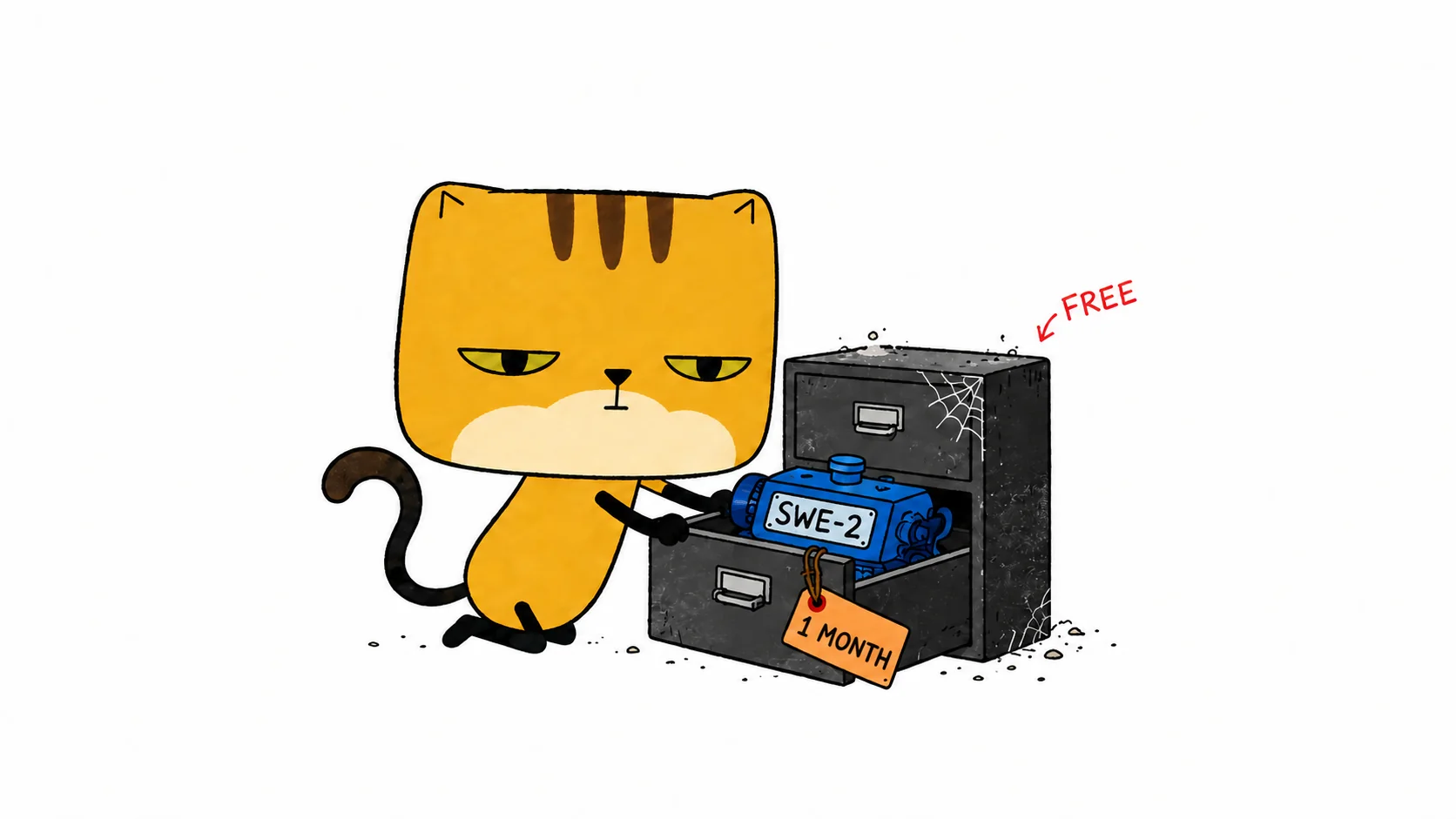
In a quiet corner of the AI coding world, Devin has released a new model called SWE-2. Devin Pro, Max, and Teams subscribers can use it free for a month. The announcement has attracted surprisingly little attention while GPT-6, Claude, and Gemini dominate the conversation.
But SWE-2 is not the most interesting part of this story. The more interesting part is the product in which it appeared: Devin Desktop.
That product used to be Windsurf.
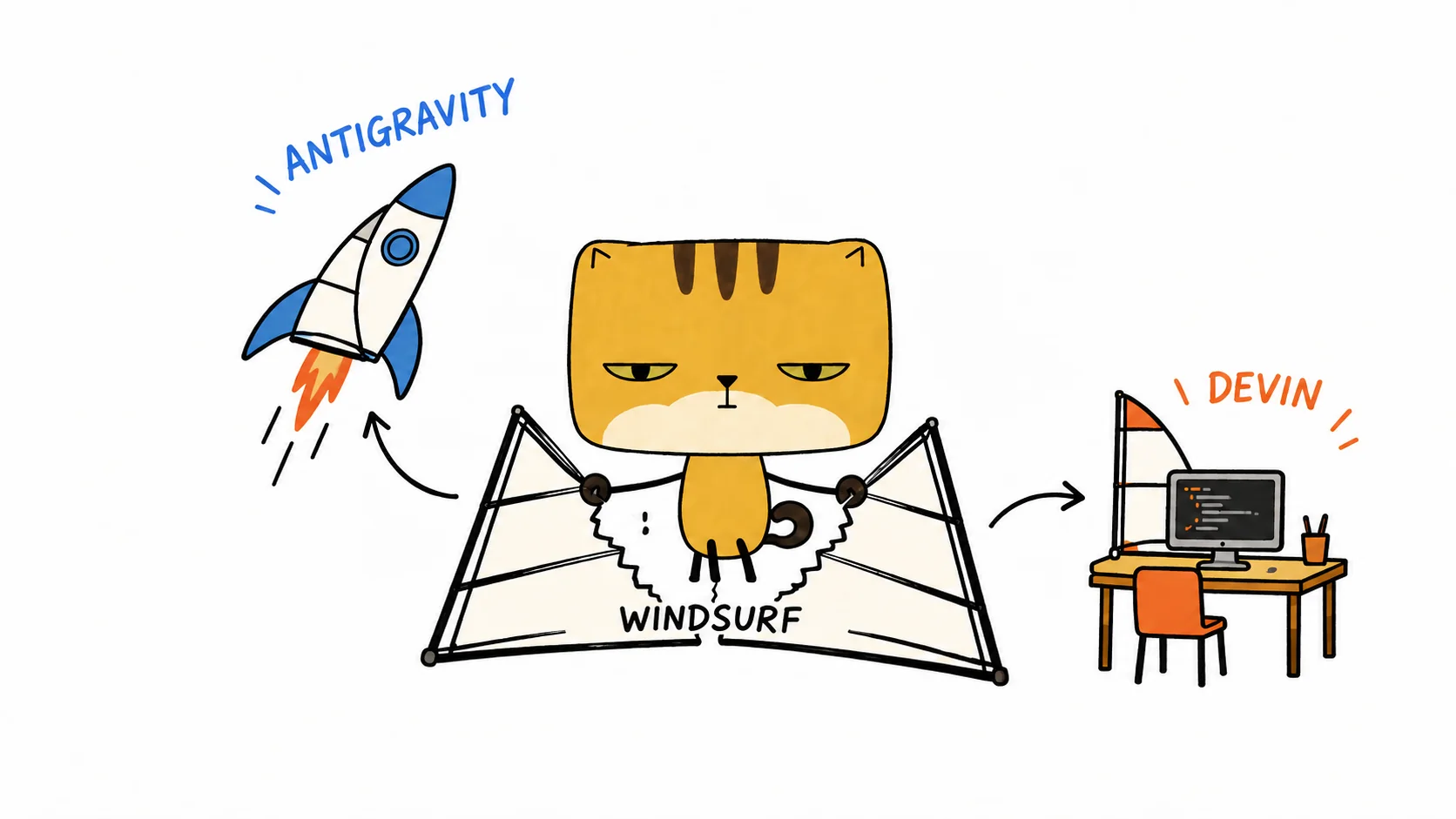
And the story of Windsurf may be the strangest timeline in AI coding. The company did not simply get acquired and disappear. It effectively split into two different futures.
One branch went to Google and grew into Google Antigravity, often shortened to AGY. The other was acquired by Cognition and eventually became Devin Desktop.
Windsurf, in other words, is gone as a company and gone as a product name. Yet its DNA is still alive in two of today’s most important agent products.
Information and product availability checked on September 12, 2026.
Before Windsurf, there was a GPU infrastructure company
The story starts in 2021, when the company was called neither Windsurf nor Codeium.
MIT graduates Varun Mohan and Douglas Chen founded a company named Exafunction. Its original business was GPU infrastructure: helping companies run machine learning workloads more efficiently.
Then generative AI took off, and the founders moved quickly into AI coding. In 2022, Exafunction became Codeium, an AI code-completion product that competed directly with GitHub Copilot. A lot of programmers used it because it was fast, capable, and generous to individual developers.
The bigger insight came later. The future might not be an AI that merely completes the next few lines of code. It might be an AI that writes the code itself.
That realization pushed the company toward agents.
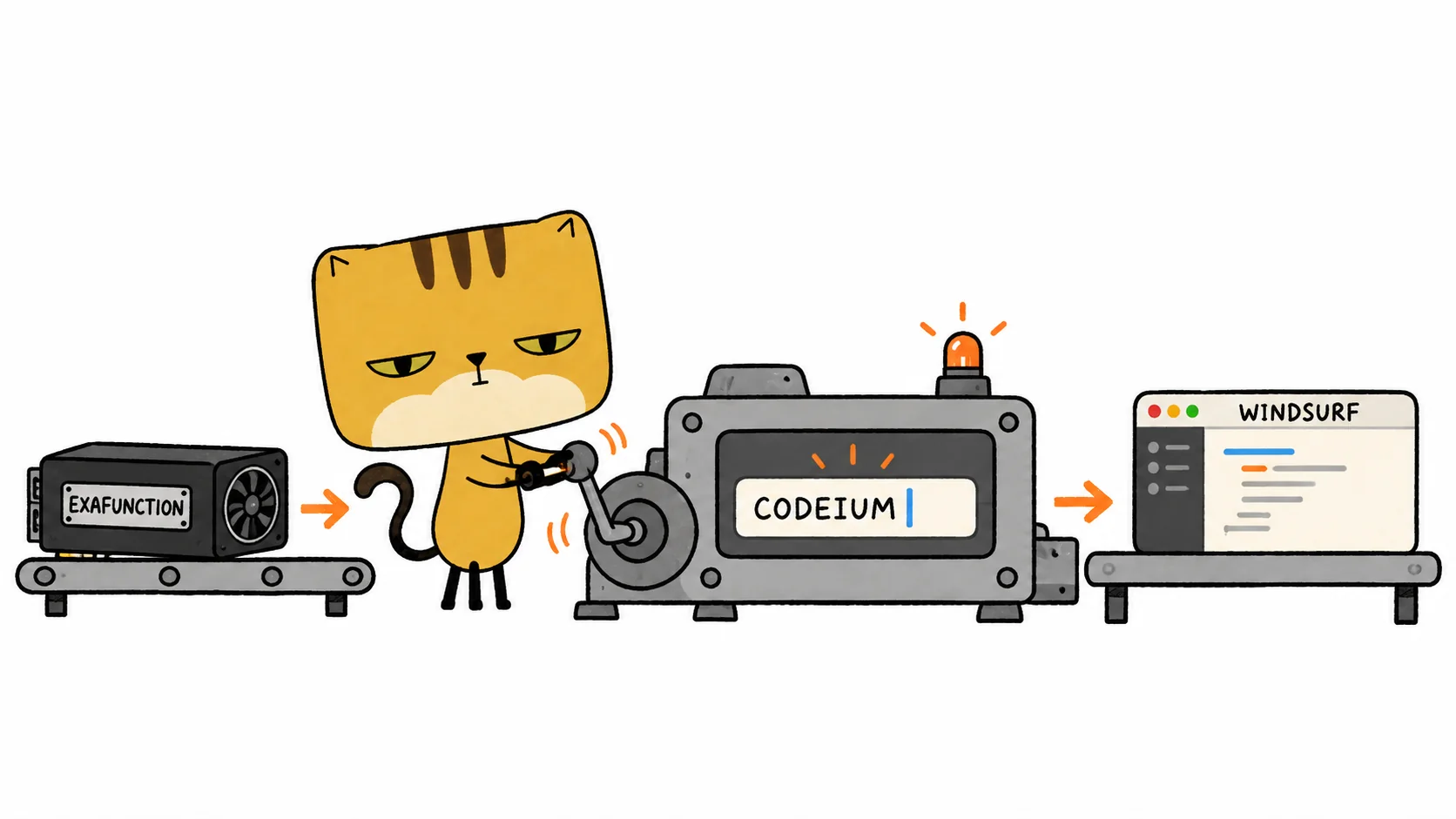
In November 2024, the company launched the Windsurf Editor, which it described as the first agentic IDE. Its central feature, Cascade, could reason across a codebase, use tools, edit multiple files, run commands, and continue working through a task.
This was already much closer to an autonomous coding agent than a traditional autocomplete tool.
In April 2025, the company completed the identity change. Codeium was officially renamed Windsurf.
Then Windsurf reached its peak.
OpenAI reportedly offered about $3 billion
In 2025, OpenAI set its sights on Windsurf. The reported acquisition price was roughly $3 billion.
The logic seemed obvious. OpenAI needed a mature AI coding product. Windsurf already had the editor, codebase understanding, and agent workflow. The two looked like a natural fit.
For a while, the acquisition seemed close to inevitable.
Then it fell apart.
OpenAI’s exclusivity period expired, and the deal did not close. The exact negotiations were private, but reporting at the time pointed to tension around how Windsurf’s intellectual property might interact with OpenAI’s relationship with Microsoft and GitHub Copilot.
That alone would have made a respectable Silicon Valley story. It turned out to be only the setup.
Google did not buy Windsurf—it took the people
After the OpenAI deal collapsed, Google moved almost immediately. Its approach was very different.
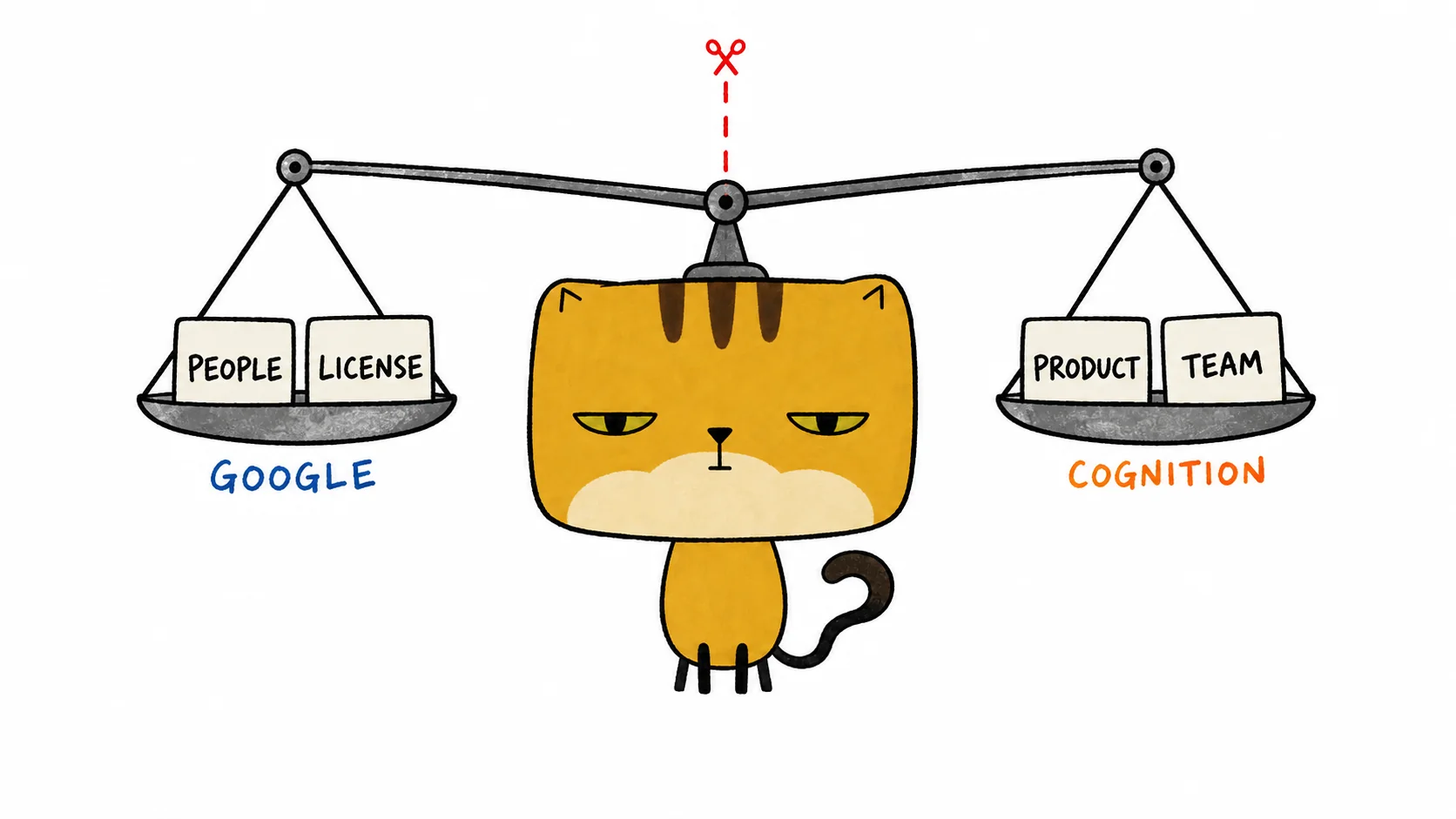
Google did not acquire the entire company. Instead, it hired Windsurf CEO Varun Mohan, co-founder Douglas Chen, and a group of core researchers. It also secured a non-exclusive license to parts of Windsurf’s technology.
The deal was worth about $2.4 billion, according to Reuters.
The result was bizarre. Windsurf the company still existed. The product, customers, and much of the staff remained. But the founders and a group of the people responsible for its core technology had moved to Google DeepMind.
At the time, it was easy to assume they would be absorbed into the Gemini organization and gradually disappear inside Google’s enormous structure.
That is not what happened.
Windsurf’s agent-first idea resurfaced as Google Antigravity
A few months later, Google launched a new agentic development platform called Google Antigravity.
Open Antigravity for the first time and the family resemblance is hard to miss: an IDE, an agent, codebase understanding, a terminal, browser control, autonomous planning, continuous execution, and multiple agents working in parallel.
That resemblance is not accidental. The people building it included the people who had built Windsurf.
Varun Mohan joined Google DeepMind and became one of the leaders behind Antigravity. His public profile has been equally direct about the work: building Antigravity at Google DeepMind.
Google’s original Antigravity announcement framed the product as agent-first from the beginning. A developer could assign a task while the agent planned, edited code, used the terminal, opened a browser, ran the program, verified the result, fixed bugs, and returned the finished work.
The developer increasingly looked less like someone supervising each line and more like a project manager directing work at a higher level. That is the same direction Windsurf had been pursuing before the split.
The difference was that the former Windsurf team now had access to Gemini, Google’s compute, browser control, computer-use capabilities, and the rest of Google’s developer ecosystem.
Antigravity 2.0 became more than an AI IDE
At Google I/O 2026, Google announced Antigravity 2.0. By then, the ambition had expanded far beyond a code editor.
The new system could create dynamic subagents, run multiple agents in parallel, keep tasks running in the background, use skills, operate through a CLI, and expose its agent harness through an SDK. Google also began connecting the same agent layer to AI Studio, Firebase, Android, and the Gemini API through Managed Agents.
The official Google I/O announcement was co-authored by Varun Mohan, now a director of software engineering at Google DeepMind.
That detail makes the lineage unusually clear.
Calling AGY “Google’s Windsurf” is no longer quite accurate. It has grown into something larger: the next generation of Windsurf’s agent-first idea, developed with Google’s models, infrastructure, and distribution.
This is also the direction I expect more AI workflows to take. The editor becomes one surface among several, while the agent and its tools become the real product.
The other half of Windsurf went to Cognition
Google had hired the founders and licensed technology, but it had not bought Windsurf itself. The remaining company still had a product, employees, customers, intellectual property, and a brand.
Three days after the Google deal, Cognition stepped in.
The company behind Devin signed an agreement to acquire Windsurf. The acquisition included the Windsurf IDE, its intellectual property, product, trademark, brand, and the remaining team. Cognition said Windsurf had reached $82 million in annual recurring revenue and served more than 350 enterprise customers at the time.
The pairing was interesting because Windsurf and Devin represented two different approaches to AI coding.
Windsurf was built around a developer working locally with an agent inside an IDE. Devin was built around sending work to a cloud agent and letting it operate independently.
One optimized collaboration at the keyboard. The other optimized delegation away from it.
Now both belonged to the same company.
Windsurf eventually became Devin Desktop
Cognition gradually brought the two products together. Windsurf contributed the local development environment. Devin contributed the cloud agent, long-running execution, and delegation model.
On June 2, 2026, Cognition made the merger explicit: Windsurf became Devin Desktop.
The update turned the former Windsurf editor into an agent command center. Developers could manage local and cloud agents in one place while retaining the editor, extensions, keybindings, language servers, and workflows inherited from Windsurf and VS Code.
The Windsurf name, once a direct competitor to Cursor, disappeared.
Its product direction did not.
That left the AI coding market with a surreal result. One Windsurf lineage became Google Antigravity. The other became Devin Desktop.
Then Devin quietly released SWE-2
That brings the story back to the announcement that started this article.
On September 10, 2026, Cognition introduced SWE-2, a model trained specifically for software engineering and coding agents. It was post-trained from Kimi K3, a 2.8-trillion-parameter model that had already received extensive reinforcement learning for agentic coding.
In Cognition’s published results, SWE-2 scored 50.0% on FrontierCode 1.1 Main, within one point of Fable 5.1 while costing 64% less. The company also reported that SWE-2 at medium effort outperformed its previous SWE-1.7 model while using 58% fewer turns and costing 81% less on average.
Those are Cognition’s own benchmarks. They are useful enough to decide whether the model deserves a test, but they are not a substitute for running it on a real repository.
The easiest part to evaluate is the launch offer. SWE-2 is available in Devin Desktop and Devin CLI, with rollout also underway for Devin Web and Fusion. Cognition announced that Pro, Max, and Teams subscribers can use SWE-2 free for one month.
If you already have one of those subscriptions, this is an unusually low-friction opportunity to test the model on actual engineering work.
The complete Windsurf timeline
Put the whole sequence together, and it looks like this:
Exafunction began as a GPU infrastructure company in 2021.
↓
It became Codeium, an AI code-completion product, in 2022.
↓
The company launched the agentic Windsurf Editor in late 2024 and renamed itself Windsurf in 2025.
↓
OpenAI reportedly tried to acquire Windsurf for about $3 billion.
↓
The deal failed.
↓
Google spent about $2.4 billion to hire the founders and core researchers and to license part of the technology.
↓
That former Windsurf group built Google Antigravity, which evolved into Antigravity 2.0.
At the same time, the other branch continued:
The remaining Windsurf company
↓
was acquired by Cognition
↓
was integrated with Devin
↓
became Devin Desktop
↓
and now ships Cognition’s own coding model, SWE-2.
That may be the most remarkable part of the Windsurf story. The company is gone. The name is gone. But its two sets of genes live on inside two major agent products.
One is called Antigravity. The other is called Devin.
OpenAI never completed its Windsurf acquisition. Somehow, the failed deal still helped produce two separate AI coding product lines at Google and Cognition.
Even by Silicon Valley standards, that is a ridiculous story.