How ChatGPT Makes Models Dumber: What Tricks Does It Use?
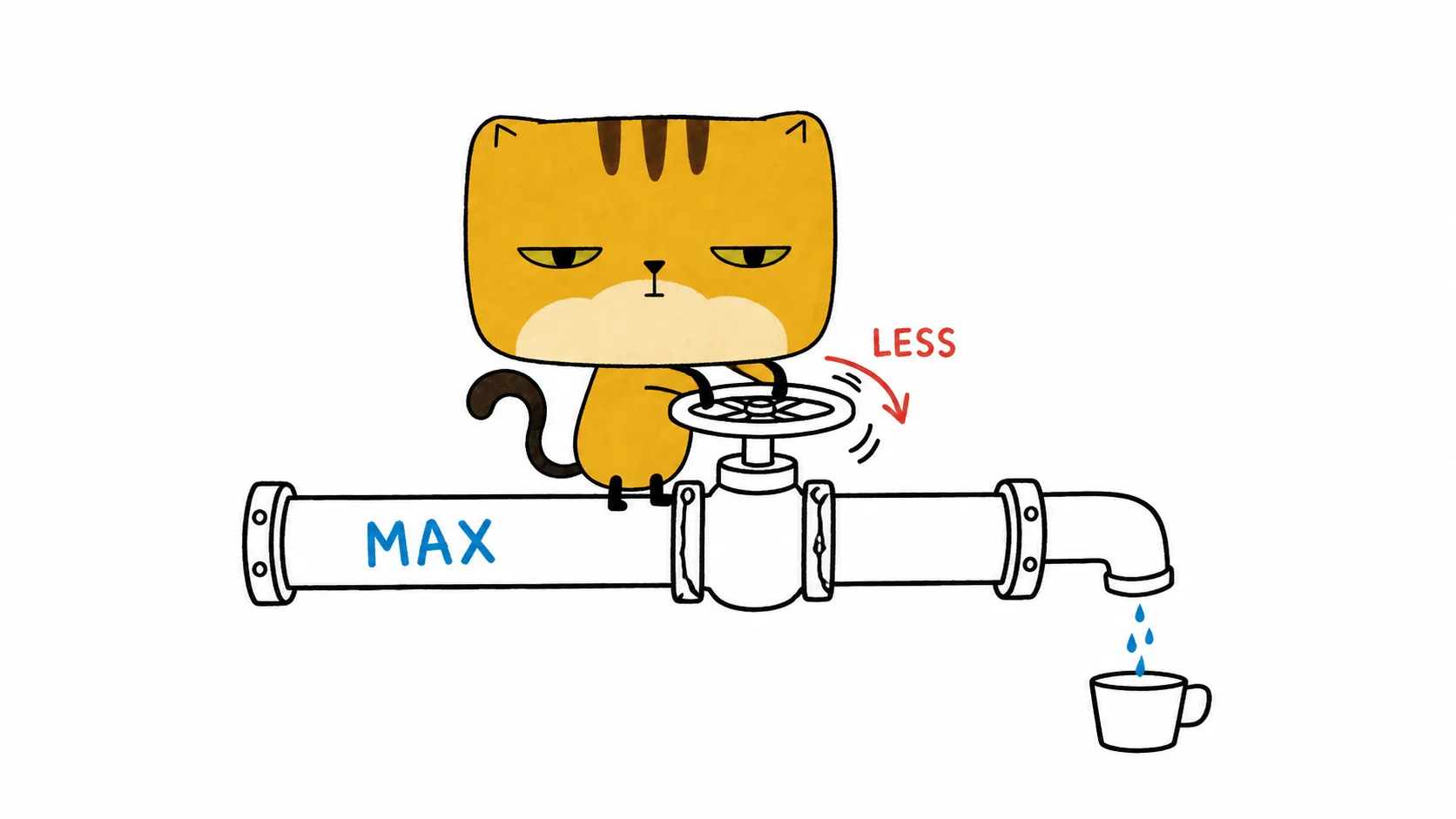
A lot of people using ChatGPT’s newly released flagship models can feel it: right after launch, the model is fast and smart, doing exactly what you ask. But once more users show up and tasks get more complicated, it starts to feel noticeably dumber. Sometimes you can even ask what model it is, and it will straight-up tell you it’s GPT-5.5 mini.
So what shady tricks are these AI models pulling?
1. Risk controls kick in, and they don’t even bother hiding it
This is when you ask what model it is, and it directly tells you it’s GPT-5.5 mini. It’s an obvious sign of risk controls, possibly related to your usage environment, multiple people using the same account, or a reverse proxy getting detected. When using Codex, you’ll also clearly feel that your usage allowance has been cut significantly. A few questions and you’re already at 100%.
2. Secretly routing requests to smaller models
This usually happens when compute is under heavy pressure. Based on how difficult your question is, the system automatically picks a smaller model to answer it. If the question is complicated, though, it calls the real model.
The clearest sign is that when you ask a simple question, it answers instantly regardless of the reasoning effort level you select. Obviously, it hasn’t done any thinking.
But the process it uses to decide whether a question is simple is a black box. Sometimes it gets that judgment wrong, making the drop in intelligence obvious to the user.
3. Lowering the Juice value
The Juice value, often called the “juice level” in the community, is a hidden parameter in OpenAI’s reasoning models that controls how deeply the model thinks. In the GPT-5.6 Sol era, the values by tier were:
GPT-5.6 Sol (ultra): 960
GPT-5.6 Sol (max): 960
GPT-5.6 Sol (xhigh): 128
GPT-5.6 Sol (high): 40
GPT-5.6 Sol (medium): 16
GPT-5.6 Sol (low): 8
For users who have been silently downgraded, selecting max might get them a value of 128 or even lower. This is also a form of risk control. OpenAI may have some kind of user-tiering system behind the scenes, forcibly reducing usage allowances or Juice values when compute is tight to keep the service available. After this was exposed before, they compensated users with a few resets. There was no official admission, but the implication was pretty clear.
With GPT-6, OpenAI has tightened protection around Juice values. It’s now difficult to get the model to tell you its Juice value directly using the old methods.
4. Cutting reasoning short and forcing an answer
Frankly, this is another shady move when compute is tight. While using it, you can feel that it’s trying to think, but then the reasoning suddenly gets cut off and it outputs an answer. It feels like it spits out an answer before really thinking things through, with obvious errors in the steps along the way. This is different from secretly routing to a smaller model. It feels more like lowering the Juice value.
All these tricks, including OpenAI’s decision yesterday to stop accepting new subscriptions to the 20x Pro tier, are about saving compute at peak times. After all, if OpenAI wants to go public at a trillion-dollar valuation, it has to keep making noise in the market. On one hand, it says there are too many users and not enough compute. On the other, it keeps running free promotions to attract new users, while also having to keep paying users from blowing up.
OpenAI currently has over 1 billion weekly active users, serves 2.5 million businesses, and has roughly 60 million paying users.
Serving consumers is just more of a headache than serving businesses. Look at Claude—it’s a lot more consistent than ChatGPT.